
CRC Ultra High Strength Aerosol Adhesive 550 mL Adjustable Spray Contact Bonding SA324300
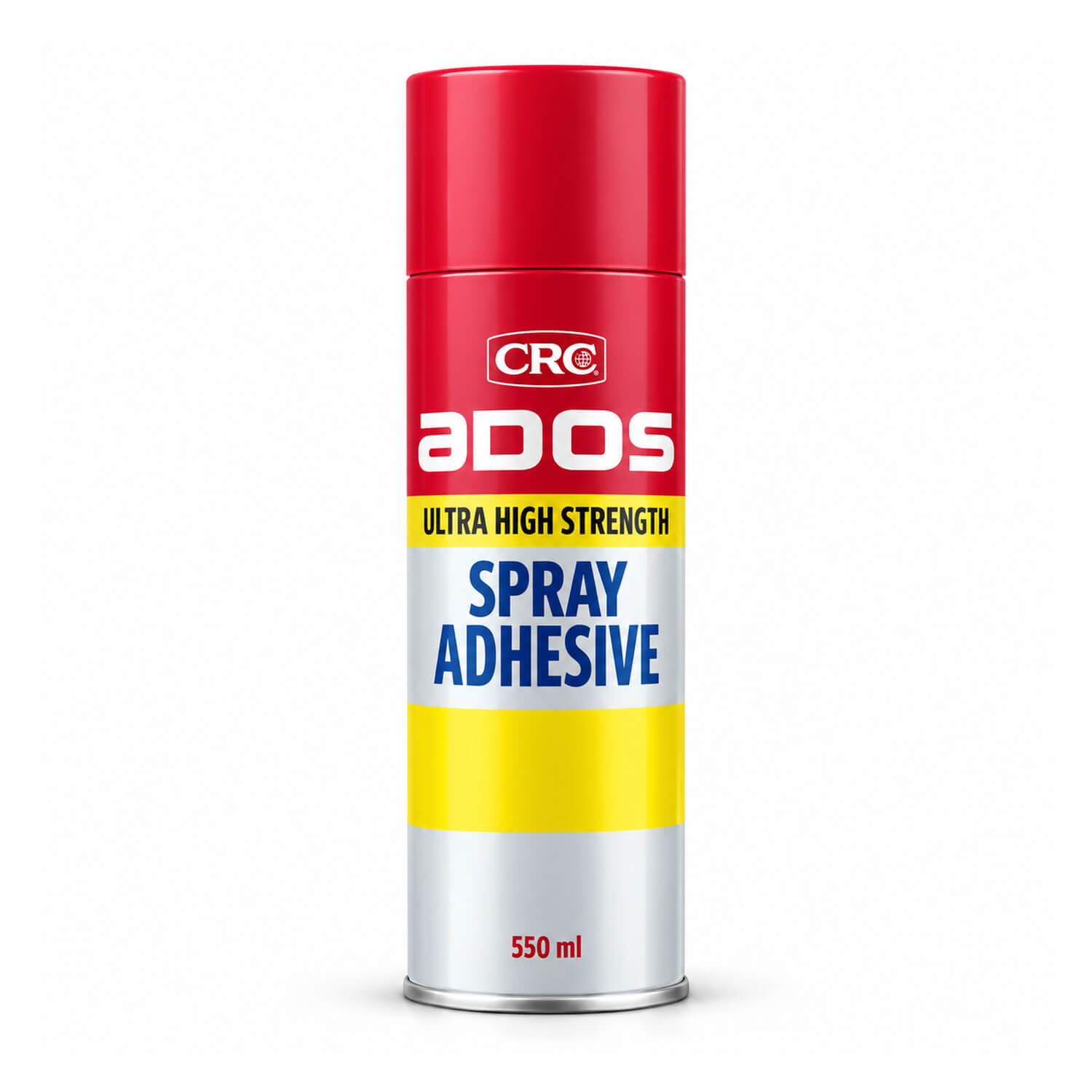

Plan accurate contact bonding with CRC Ultra High Strength Aerosol Adhesive. The adjustable nozzle lets you select a spray width, and adhesive is applied to both surfaces. Solvent is allowed to evaporate until the adhesive is tacky before the surfaces are brought together. Position parts carefully, because contact creates an immediate bond, then apply the specified overall pressure while expelling air bubbles. Follow the complete label instructions, including the need to avoid trapped solvent on non-porous materials.
Product details
- Size: 550ml
Features and intended use
- Spray an even layer of adhesive to both surfaces.
- Adjust nozzle for width of spray required.
- Allow solvents to evaporate away. In 5-10 minutes, the solvent should have evaporated and the adhesive should be ‘tacky’ enough to bond the surfaces together.
- A useful indication is to touch the surfaces (all over) with a clean finger: if they are ‘sticky’ to the touch, without transferring to your finger, they are ready to bond together.
- On non porous surfaces it is imperative that no solvent is trapped.
- Position components accurately, as when contact is made, the bond will be immediate.
- Apply maximum overall instant pressure, taking care to expel any air bubbles, to ensure a complete bond.
- Use of a hand pressure roller, e.g. a vinyl-flooring roller, provides good direct pressure.
- A dry adhesive surface may be reactivated by wiping over with solvent.
Getting the best from your purchase
Check the two materials and the condition of their surfaces before starting the bond. Prepare them according to the adhesive manufacturer's instructions, removing contamination by a method appropriate to the substrate. Position the parts in advance so you know how they will come together. Test an inconspicuous or representative area when the material or finish is unfamiliar.
Follow the label for application, ventilation, working time and the point at which the parts should be joined. Keep the work area organised so the bonding faces remain clean. Apply the recommended pressure and allow the stated time before putting the assembly into service. Avoid assuming that one adhesive or preparation method will suit every combination of materials.