
Black Nylon Canopy Deck Mount Swivel Fork Pivot 52 mm High 1/4 in UNC Pin SA25135
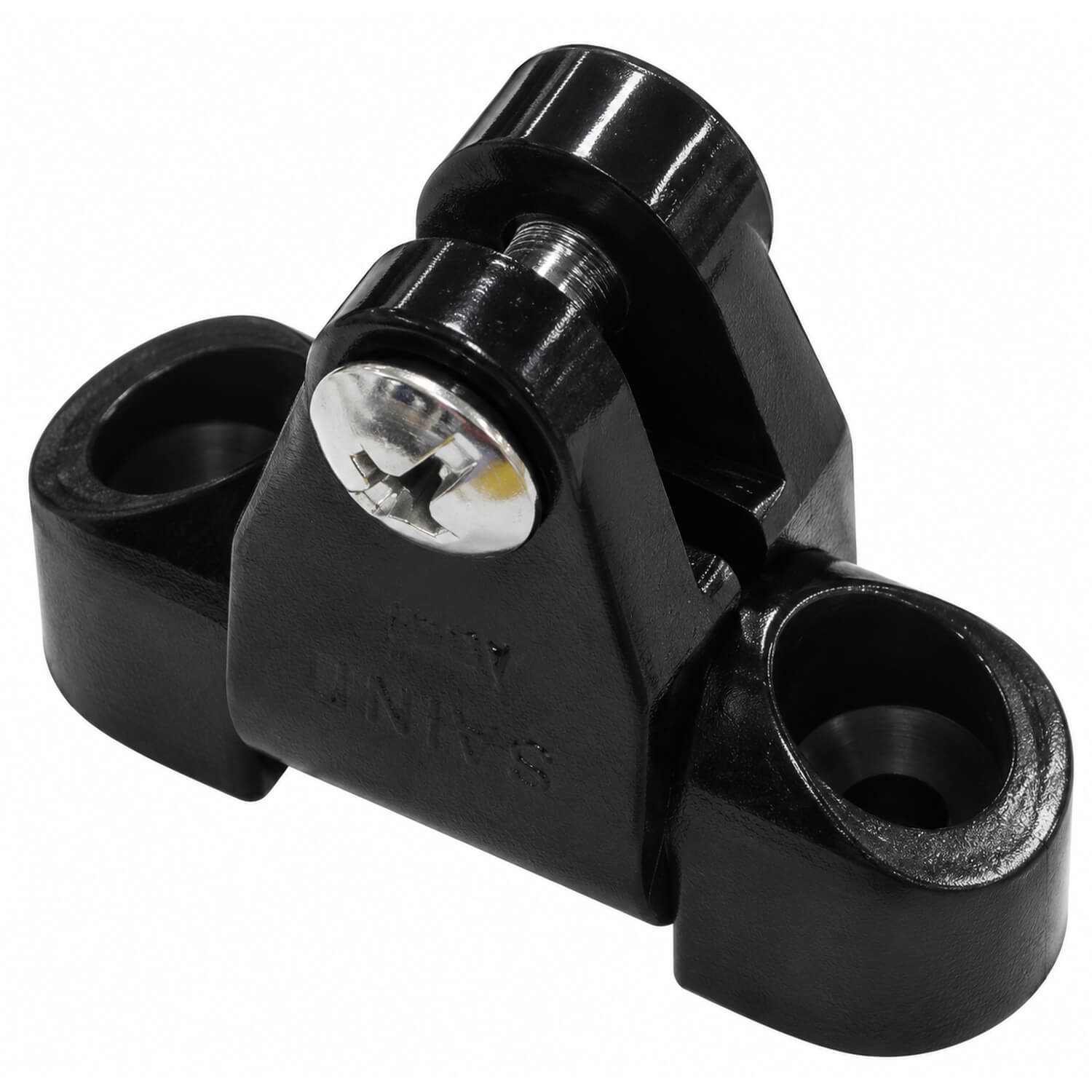

This Black nylon canopy deck-mount pivot is the swivel-fork version, part 25135. It uses a nylon base with a stainless steel threaded pin. The listed base is 63 x 20 mm, the height is 52 mm and the fork gap is 7 mm. The connection bolt is specified as 1/4-inch UNC x 3/4-inch.
Specifications and features
- Type: Swivel Fork.
- Colour: Black.
- Base (mm): 63 x 20.
- Gap Width (mm): 7.
- Height (mm): 52.
- Bolt Ø: 1/4" UNC x 3/4".
- Mounting screw specification: 6 mm countersunk.
- Nylon base with stainless steel threaded pin.
Choosing and fitting
A pivot mount should be selected with the required bow movement in mind. Check the direction of the swivel and the space available around it, including the extra height above the mounting surface. For replacement work, compare the actual old mount and its fixing positions rather than assuming that another nylon fork will share the same geometry.
The 7 mm gap needs to suit the tongue of the mating tube end, and the eye must suit the specified pin. Check those two interfaces independently. Retain the stated UNC thread specification for threaded replacement parts. Similar-looking metric and imperial hardware should not be interchanged without confirming the correct fit.
The source specifies 6 mm countersunk mounting screws. Their length and supporting arrangement need to suit the real mounting surface. Trial-position the canopy and move the joint through its intended range before deciding on fixing positions. Make sure the threaded pin remains accessible and that the pivot does not rub on fabric, trim or an adjacent component.
Care and inspection
Inspect the nylon for damage and check the stainless steel pin and mounting fasteners for wear or loosening. Keep the pivot and eye contact areas clear of grit and clean salt deposits from exposed metal. Confirm secure retention before using the canopy and recheck after folding or transport. Look at the mating bow end and supporting surface during the same inspection so any movement can be traced to the whole connection.