
TMC In-Line Marine Bilge Blower - 12V, 75mm Hose, 122 CFM RWB1320
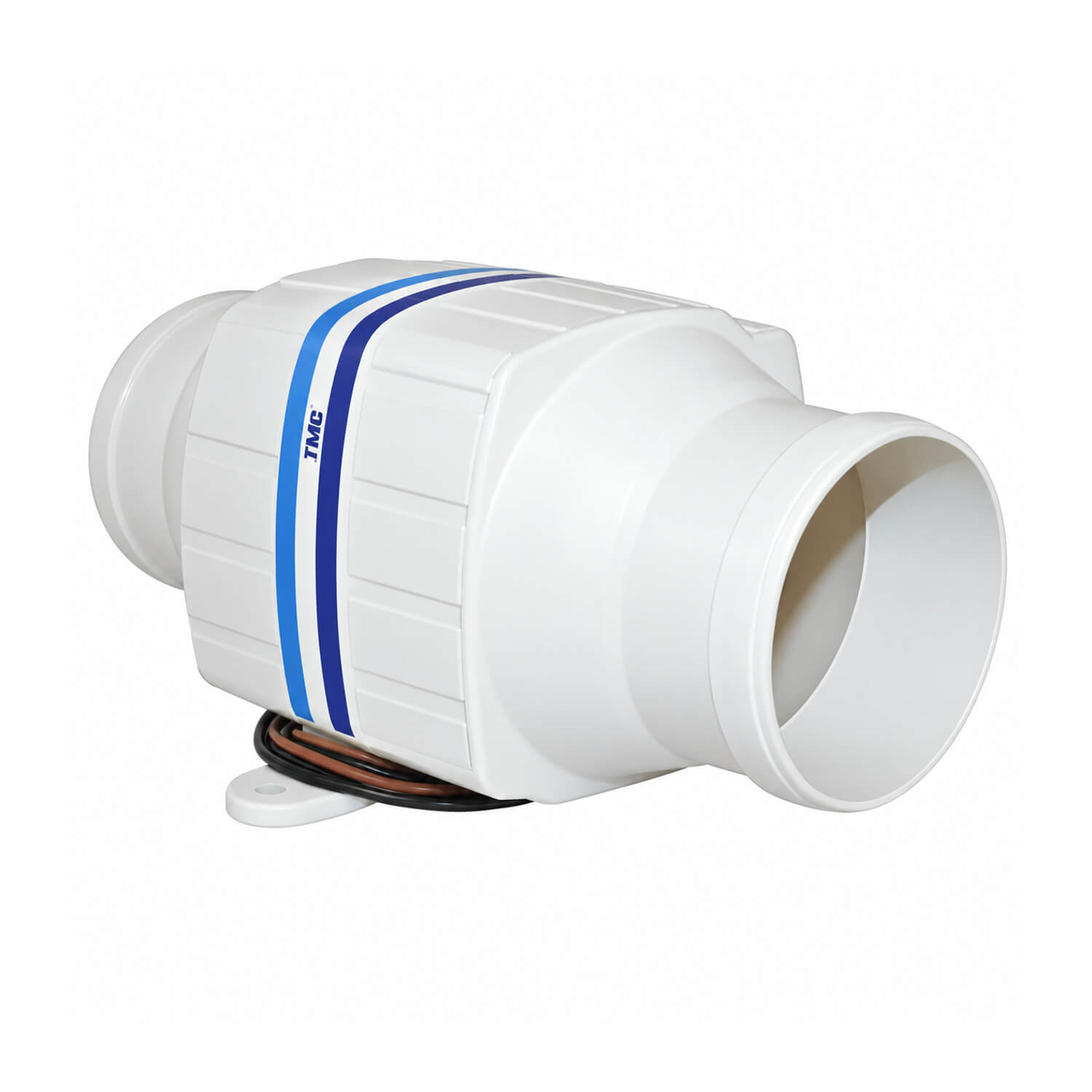

The TMC 12V in-line bilge blower combines a white ABS housing with hose connections at both ends, making it a useful option for a ventilation route built around 75mm ducting.
White ABS in-line blower with water-resistant motor casing, integral mounting bracket and hose connections at each end.
- Voltage: 12V
- Current: 4.5A
- Airflow: 122 CFM (3.45 cubic metres/minute)
- Hose size: 75mm
The listed airflow is 122 CFM, or 3.45 cubic metres per minute. Use that figure alongside the intended compartment and complete hose route when comparing blower options. The in-line layout is particularly relevant when deciding where the unit can sit between sections of ducting, rather than choosing only by the nominal hose diameter.
An integral mounting bracket is included in the design, and the motor casing is water-resistant. For installation planning, identify a suitable mounting surface and allow room around the bracket for access. Follow the manufacturer’s placement instructions and consider the conditions at the proposed position when assessing the complete ventilation arrangement.
Check that the available supply is 12V and review the stated 4.5A current when arranging wiring and protection. Cable length, switching and connection access should be considered as part of the installation. If replacing an existing blower, compare the electrical details with the old unit rather than assuming that every 75mm blower has the same requirements.
Measure the hose already fitted, then plan the approach to each end of the blower. As practical guidance, avoid compressing the hose or introducing sharp turns immediately beside the connections. Support the ducting so its weight and routing do not create unnecessary strain at the blower.
A useful pre-installation check is to trace the entire air path, including the fresh-air opening and discharge point. Make sure both remain accessible for inspection and free of stored items. Refer to the blower instructions for its operating requirements, and follow the boat builder’s ventilation procedure when the system is used around an engine compartment.