
Sutars Illuminated Marine Dual USB Charging Socket - 12-24V, 5A RWB2732
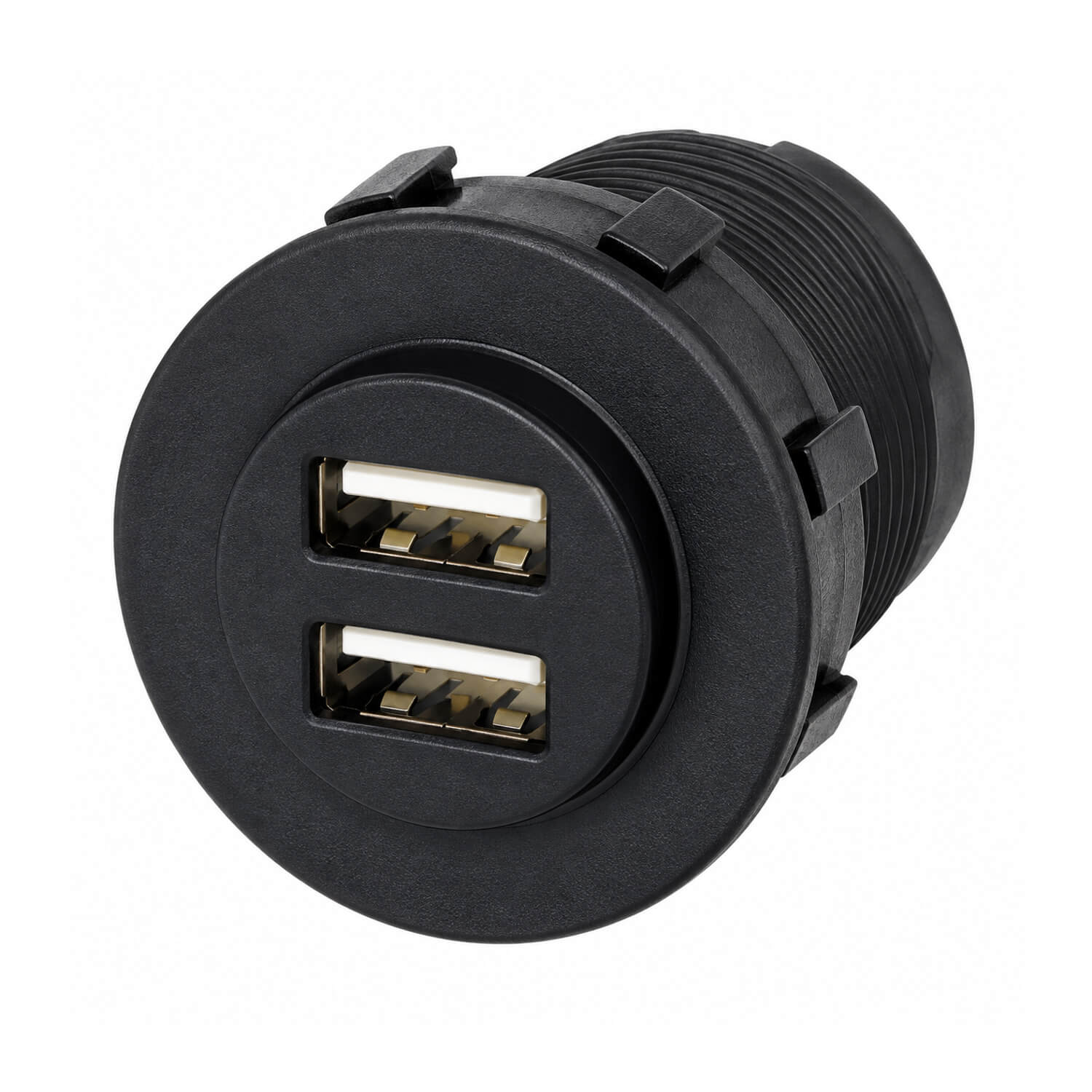
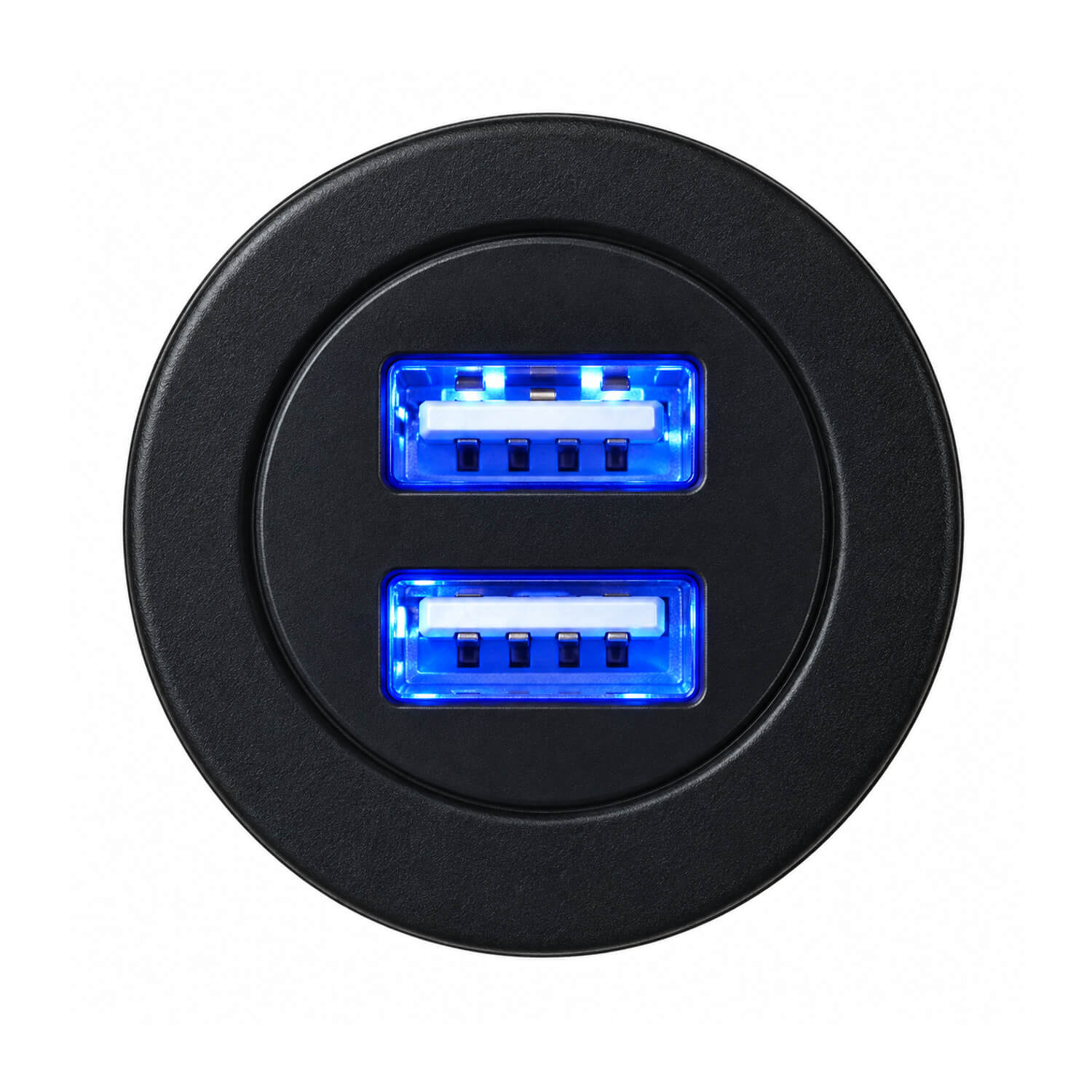

Compact Swedish-made recessed USB socket with blue LED illumination and rear screw-nut mounting. Includes reverse-voltage, overvoltage and thermal-overload protection, and a retained Santoprene rubber cap. IP65 when the cap is closed.
- Input: 8-29V for 12V and 24V systems
- Maximum output: 5V DC, 5A
- Ports: 2
- Width: 36.7mm
- Depth: 49.3mm
- Maximum panel thickness: 17mm
- Mounting hole: 30-32mm diameter
- Terminals: two 6.3mm push-on
- Colour: black
- CE approved
This recessed socket adds two USB charging points to a helm, cabin panel or other suitable location. The blue illumination makes the ports easier to locate, while rear-nut mounting gives the front panel a neat appearance without visible fastening screws. It is a useful option when planning a permanent charging location for compatible USB-powered devices.
Before selecting a position, check the available depth behind the panel and the panel thickness. Allow room for the push-on terminals and supported wiring, as well as the charging cable bend at the front. The retained cap should be able to close fully when the socket is unused, because the stated IP65 protection applies with that cap closed.
For general installation, isolate the supply and follow the product wiring instructions. Verify polarity and use suitable circuit protection despite the built-in protection features. Route charging leads away from helm controls and provide a secure place for the connected devices so they do not slide or hang by their cables.
Match the connected devices and cables to the stated USB output when planning simultaneous charging. After installation, check operation and cap closure, then include the port area and electrical connections in routine maintenance. Remove salt or dirt carefully and inspect the cap retainer so the cover remains available whenever the socket is idle.
A cabin charging station may suit devices used away from the helm, while a helm position can keep a navigation device nearby. In either case, plan the device support and cable route together.