
Six-Switch Thermal Marine Circuit Breaker Panel - 12V, 165 x 115mm RWB539
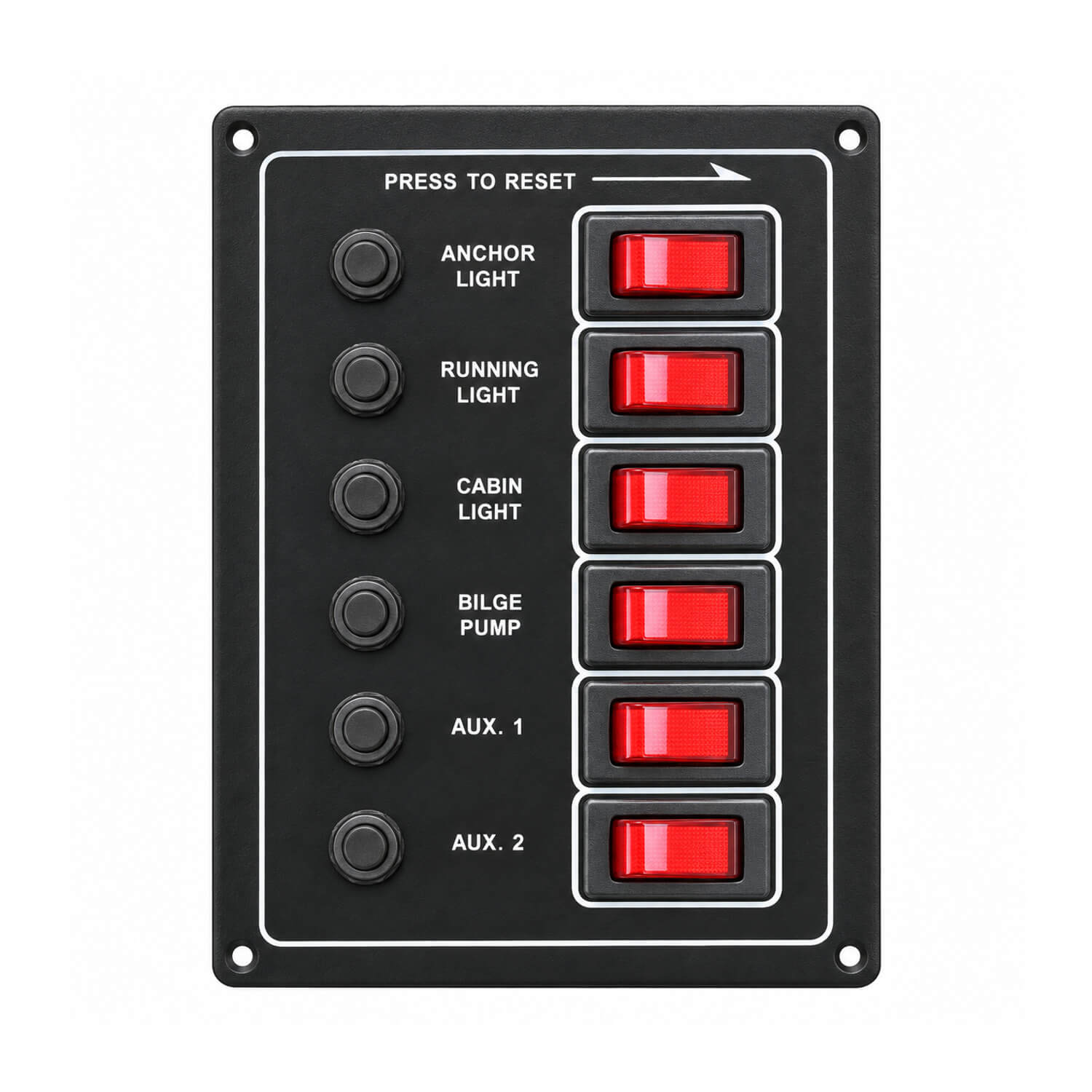

Six red illuminated rockers and six thermal breakers put circuit control and reset points together on an aluminium face. The breaker mix provides two positions each at 5A, 10A and 15A, so plan accessory allocation before wiring. Consider the 165 H x 115mm W footprint for a suitable control area. A tripped breaker should prompt a check of the affected circuit before reset, rather than repeated attempts to restore power.
Matt-black aluminium panel with six red illuminated rocker switches and six push-reset thermal circuit breakers.
- Voltage: 12V only
- Size: 165 H x 115mm W
- Breakers: two 5A, two 10A, two 15A
For layout planning, list the accessories you want to operate separately, then match each circuit to its electrical load and protection requirements. Cabin lighting, deck lighting and other auxiliary equipment are possible uses where the individual appliance requirements suit the panel. Position frequently used controls where the operator can reach them comfortably without reaching across the wheel or other instruments. Clear circuit identification also makes it easier for another person aboard to find the correct control.
Before cutting the mounting surface, check the actual panel, rear components and cable route together. Allow room to make connections without forcing wires against the panel back, and retain access for inspection and servicing. The stated face dimensions should be used for space planning; confirm the required opening from the product before cutting. Support the cable loom so movement and vibration are not carried by the terminals.
Installation should include correctly sized cable, suitable upstream protection and connections appropriate to the boat's electrical system. Have a suitably qualified installer confirm the arrangement where necessary. After installation, test each circuit individually, label it to match the connected equipment and record the layout for later fault finding.
For ongoing care, inspect the mounting, labels and cable connections during routine electrical checks. Keep the operating area clear of loose gear, and address a loose control, damaged cover or repeated fuse or breaker operation before continued use.