
Rule In-Line Marine Bilge Blower - 75mm, 24V, 135 CFM RWB649
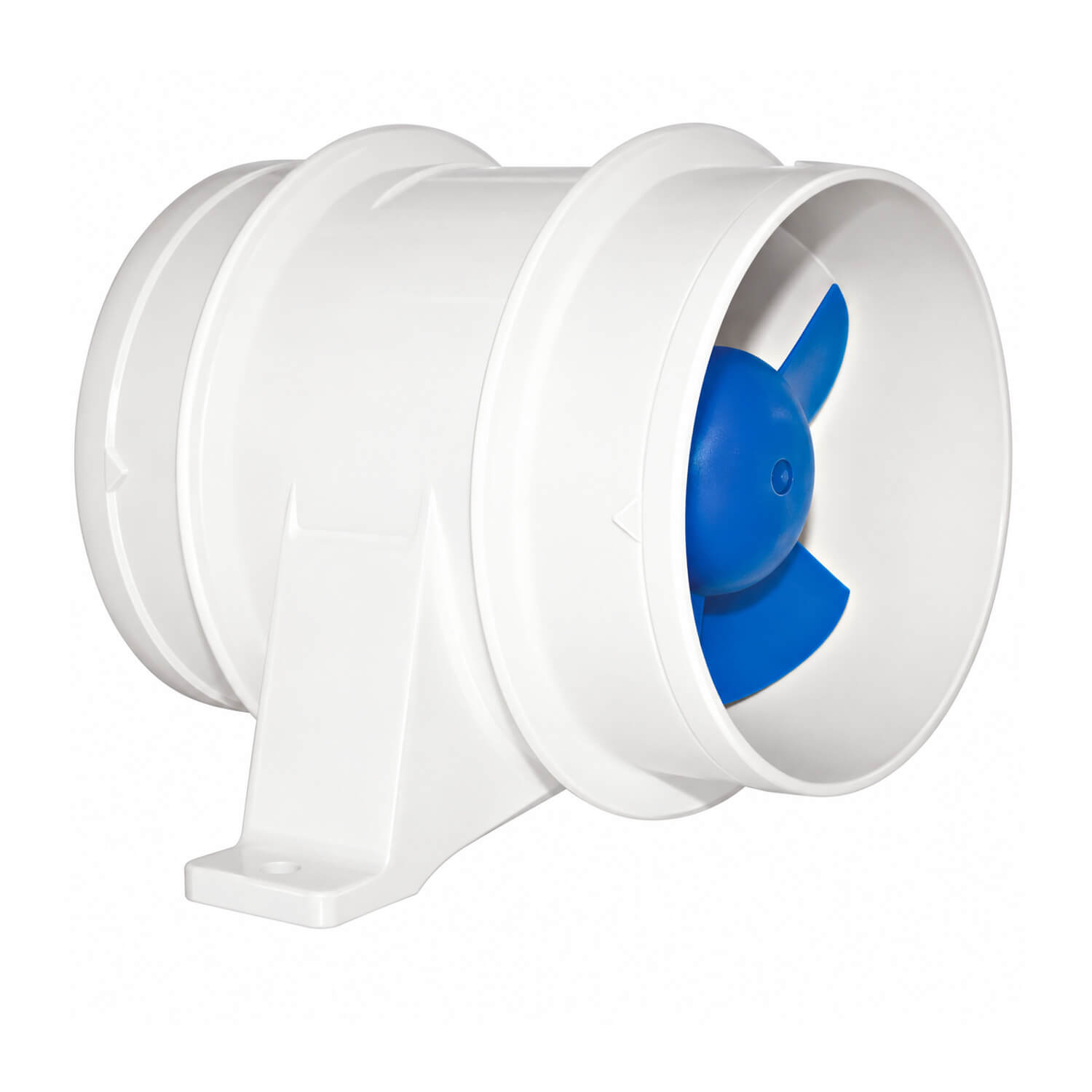

The Rule 75mm in-line bilge blower provides 135 CFM airflow for a 24V system. Its straight-through layout offers a useful option when the ventilation hose route and mounting surface favour an in-line installation.
Ignition-protected in-line blower for bilges, engine compartments, galleys and heads. Five-blade fan with nose cone, integral mounting bracket, hose flange stops and front/rear shaft seals for moisture protection. In-line airflow cools the motor.
- Voltage: 24V
- Current: 1.7A
- Hose: 75mm (3 inch)
- Airflow: 135 CFM (3.8 cubic metres/minute)
- Size including bracket: 130 L x 125 W x 95mm H
The five-blade fan and nose cone form the airflow assembly, while the in-line air movement also cools the motor. Front and rear shaft seals provide moisture protection, and the integral bracket gives you a defined mounting point. Hose flange stops help identify the connection positions when laying out the ducting.
Choose RWB649 by matching all three main requirements: 24V electrical supply, 75mm hose and the airflow needed for the intended space. For a replacement, compare the overall dimensions including the bracket with the room available around the existing unit. Leave additional working space for connecting the hose and inspecting the wiring.
For a new installation, plan where fresh air will enter as well as where extracted air will leave. Consider the complete duct route through the bilge, engine compartment, galley or head. As practical installation guidance, support the hose and avoid crushing it behind equipment or forcing it around unnecessarily tight bends.
The ignition-protected construction is a stated product feature; suitability for the particular boat and ventilation arrangement should still be checked against the installation instructions. Review the listed current when arranging the electrical circuit, with cable size and protection selected for the actual installation. Keep the blower and duct connections accessible for periodic checks, and follow the boat builder’s ventilation procedure before engine operation.