
Brass Marine Ignition Starter Switch - Off/On/Start, 12V 20A, Two Keys RWB1304
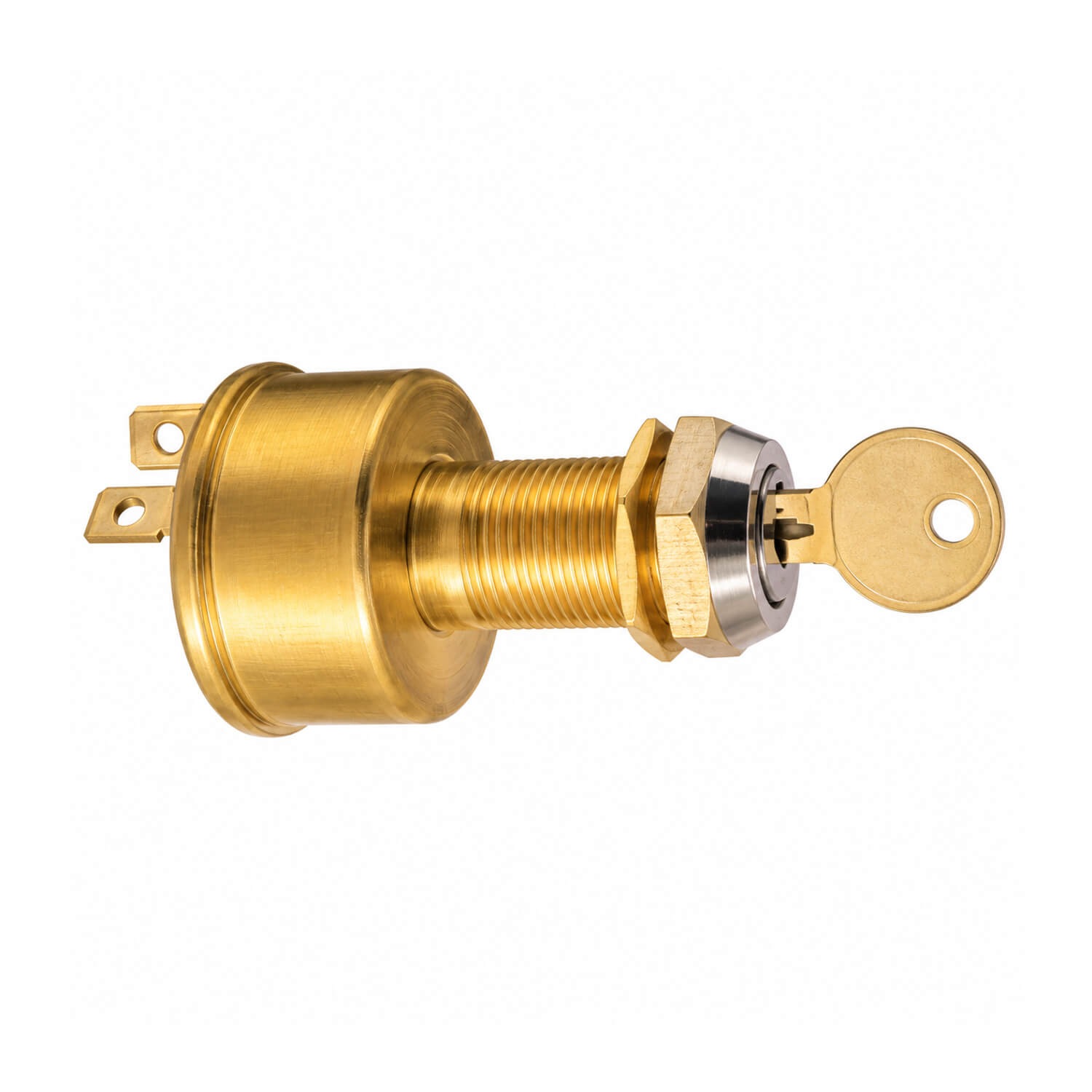

The off, on and start positions combine ignition control in a keyed brass switch. It can be considered when replacing a compatible three-pole starter switch or building an appropriate control arrangement. Check the existing terminal functions and engine wiring before changing over. Two supplied keys make it possible to keep one in normal use and store the second securely as a spare. The 20mm shaft and 25mm maximum dash thickness are important fit checks.
All-brass three-pole ignition switch with off, on and start positions. Brass terminals and screws, with two keys supplied.
- Rating: 20A at 12V
- Maximum dash thickness: 25mm
- Shaft stem diameter: 20mm
For a replacement, compare the original switch's operating action, electrical rating and mounting arrangement before choosing the new part. A similar appearance alone does not establish that the wiring arrangement matches. For a new installation, identify the equipment being controlled and check its normal current, starting demand where relevant, and required switching function. Use a suitably qualified marine electrical installer if the circuit requirements are uncertain.
Plan the mounting position around everyday operation. The control should be easy to reach and identify, with enough space around it for deliberate use. Check behind the dashboard for cables, structure and other instruments before drilling. Allow room for terminals and cable bends, and support the wiring so its weight and movement do not pull on the switch connections.
Isolate the relevant supply before installation and label existing wires before disconnecting them. Use cable and circuit protection selected for the complete installation, then secure and protect all connections appropriately. Once fitted, test the intended function under controlled conditions and make sure the control is clearly identified for other people aboard.
For ongoing care, include the control in routine electrical inspections. Check for looseness, damaged insulation or a change in operating feel, and investigate any unreliable function before continued use. Keep the surrounding area clear so the switch can be operated deliberately and its label remains visible.