
Marine Battery Selector Switch - Compact Heavy Duty, 250A Continuous RWB2121
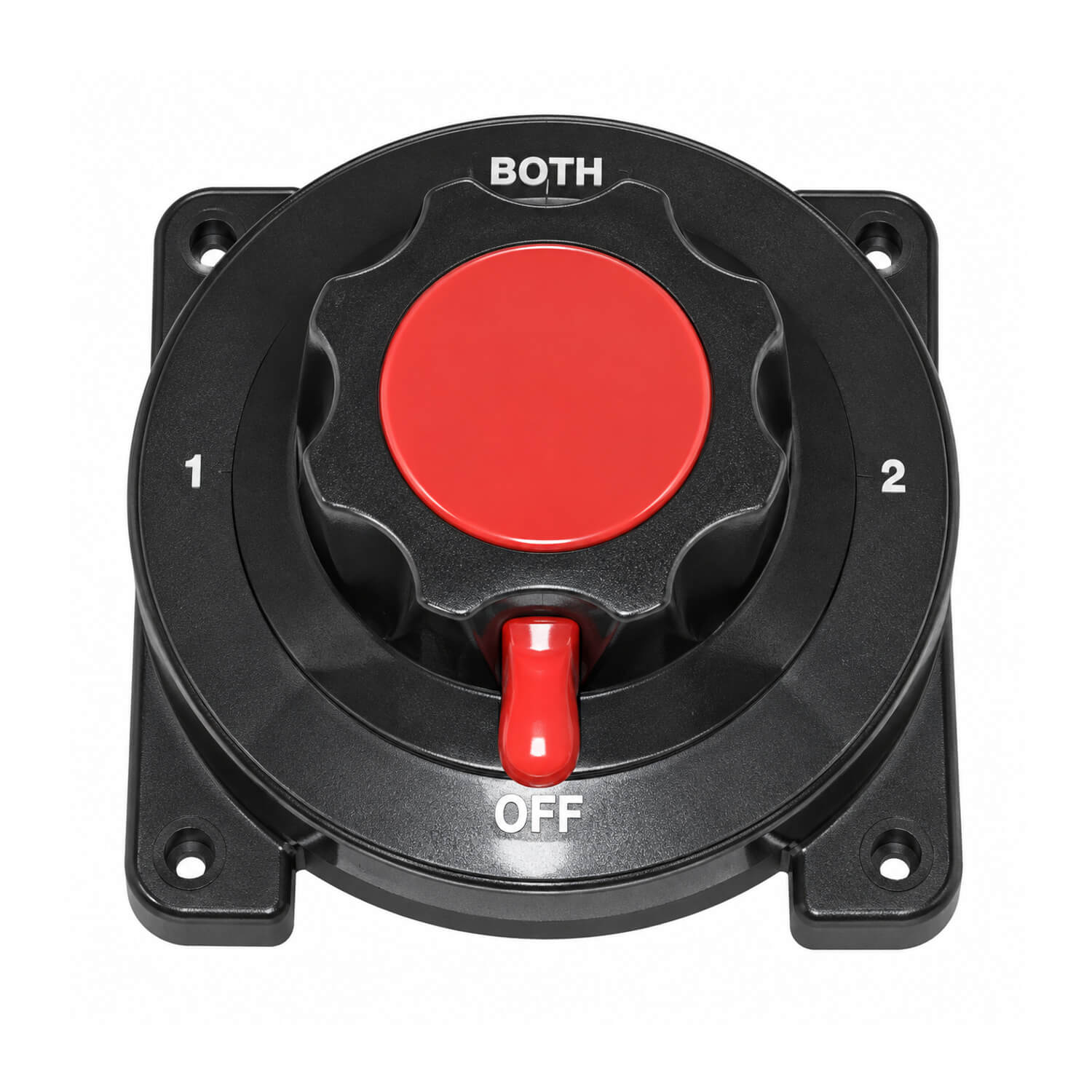

Battery selection switch with battery 1, battery 2, both and off positions. Suitable for 12V or 24V systems.
- Vapour-tight housing
- Surface or flush mount
- Luminous label
- Rating at 12V: 350A momentary, 250A continuous
- Base: 100 x 100mm
- Height: 74mm
A battery selector gives the operator a defined control point for choosing between two battery supplies or isolating the connected arrangement. Consider this switch when replacing an existing selector or planning a two-battery installation with an appropriate wiring design. The four positions help make the intended operating choices clear at the control location.
Before ordering, review the electrical demand and the relevant continuous and short-duration ratings. Check the stated voltage basis for the current figures when selecting for the vessel's system. Compare the body dimensions with the available mounting area and allow room for the cable connections behind or around the switch. Cable size, termination method and circuit protection should be planned as part of the complete installation.
Choose an accessible position where the control can be reached and its settings read easily. Label the battery banks consistently with the switch positions and keep a wiring diagram with the boat's service information. The effect of selecting both batteries depends on the system wiring and battery arrangement, so have that operating mode checked before use.
Follow the engine, charging-system and battery manufacturer's instructions when changing switch positions. Establish the appropriate switching procedure for the installed system, particularly while charging equipment or an engine is operating. For servicing, isolate supplies using the vessel's approved procedure before handling connections. Support heavy cables independently and check terminal security during routine maintenance. Make sure anyone operating the boat understands the normal starting, running and shutdown positions, along with any circuits intentionally supplied separately. This planning keeps the selector useful as an everyday control and makes later fault-finding easier.
The luminous label helps identify the control in low light; consider its visibility from the intended operating position.